Case Study: Building Hugger, a Tech for Good app to listen and prevent harassment in school
It’s widely known: everybody is different, and difference is the key to a successful society. Uniqueness drives you to happiness. What’s less known is that uniqueness is not appreciated and tolerated by most children — they can be really and awfully cruel. These incorrect behaviors can come from different sources, but it’s not the point here. What’s important is that most of us have faced them at least once. They often create deep troubles in adulthood, and sometimes, lead to unexpected and irreversible actions. This is what Hugger is about.
 Our awesome logo designed by Orelia
Context
Back in December 2019 at HETIC, we had two weeks dedicated to a team project on the topic “tech and human”. We were a team of five friends (Orelia, Constance, Nour, Elouan and me) and wanted a project that would be really meaningful and impactful. Two weeks to find an idea, do market research, and make a working prototype.
Why?
After many discussions and brainstorming for almost two days, we all shared personal stories of more-or-less important cases of harassment we had faced. One point was clear: everybody was saying about themselves that it wasn’t “real harassment” while others told them it was. Even during interviews. The vision of harassment was either it leads to suicide or it’s not harassment. Our first mission: there is no distinction between harassment cases. They are all as important.
In France: 1 out of 10 children is victim of violent harassment leading to disastrous action, and 1 out of 3 children is victim of harassment.
I have a friend who wrote a book about it — if you read French, you should buy Au nom d’un harcelé.
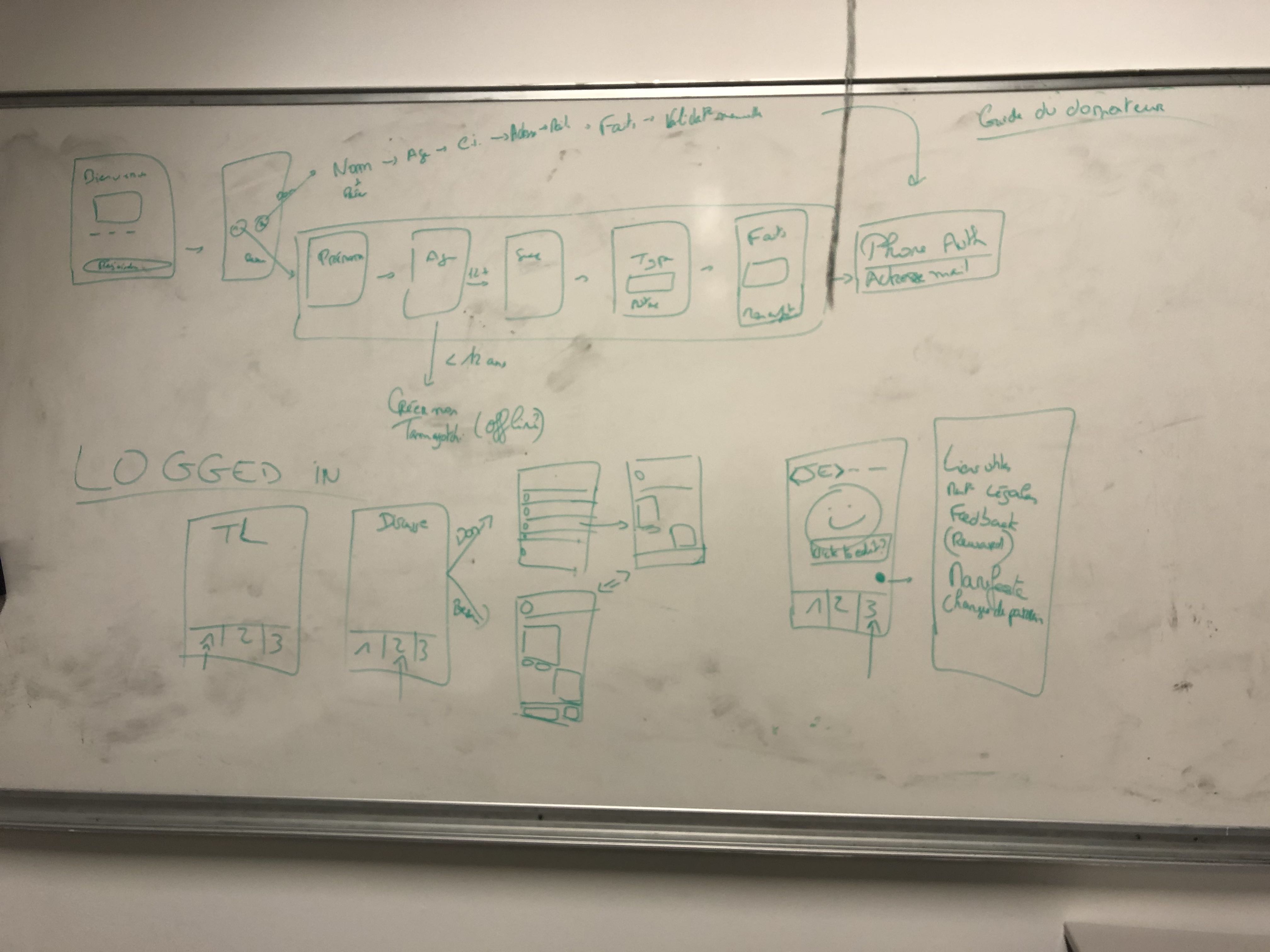 Trying to define the on-boarding
How?
Something must be done. We had to think: what would be the best solution? Most children get their first smartphone at age 11-12, so we decided to make an app. But you can’t forget 8-year-olds, and you can’t have the same behavior pattern with them, so under a certain age the child would talk with a chatbot (on the family iPad, for instance) and the parent would indirectly control. The child would be able to customize the mascot to reflect their personality.
For older children, called Huggys, they would talk to Huggers — a list of hand-picked students in psychology or medicine — every time they felt the need. As the Hugger can’t handle everything, they have an emergency button to call either firefighters, police, or the school principal.
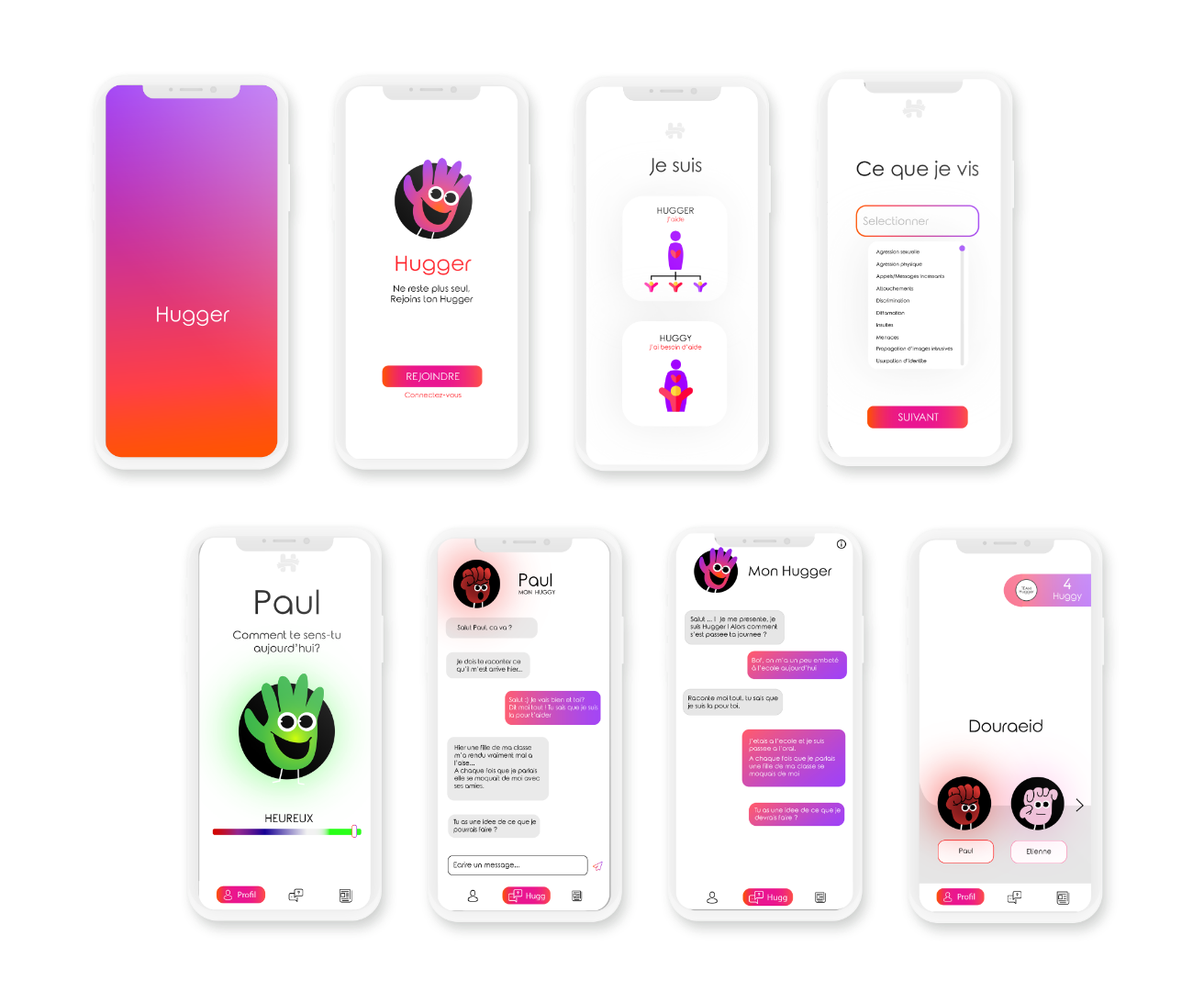 Mockups of the app
Close to presentation
We chose not to prototype the chatbot, as it would behave like a classic bot. The app was built day and night, almost no sleep in the last three days before presentation.
For those interested, the tech stack is React Native and Firebase.
The app worked correctly: signup, manual approval of Huggers, and instant messaging with mood alert. We were only missing push notifications to be a real app.
Why we haven’t continued
It was the first time in my schooling I spent that much time without sleeping, completely devoted to the project and the cause. We tried to continue the app, but when we called the legal authorities to know what’s legal and what’s not, it was clear we had to dedicate more time than a few hours a day to make it legal — and above all, safe from predators. We spent hours of discussion with GDPR representatives and school principals to know if the problem was correctly addressed and how they could help us promote the app inside their building.
A huge shoutout to the whole team for their awesome work — we shared really good insights during this week. Thanks Orelia, Constance, Nour, and Elouan.
Have a look at their work — they’re really good at what they do.